


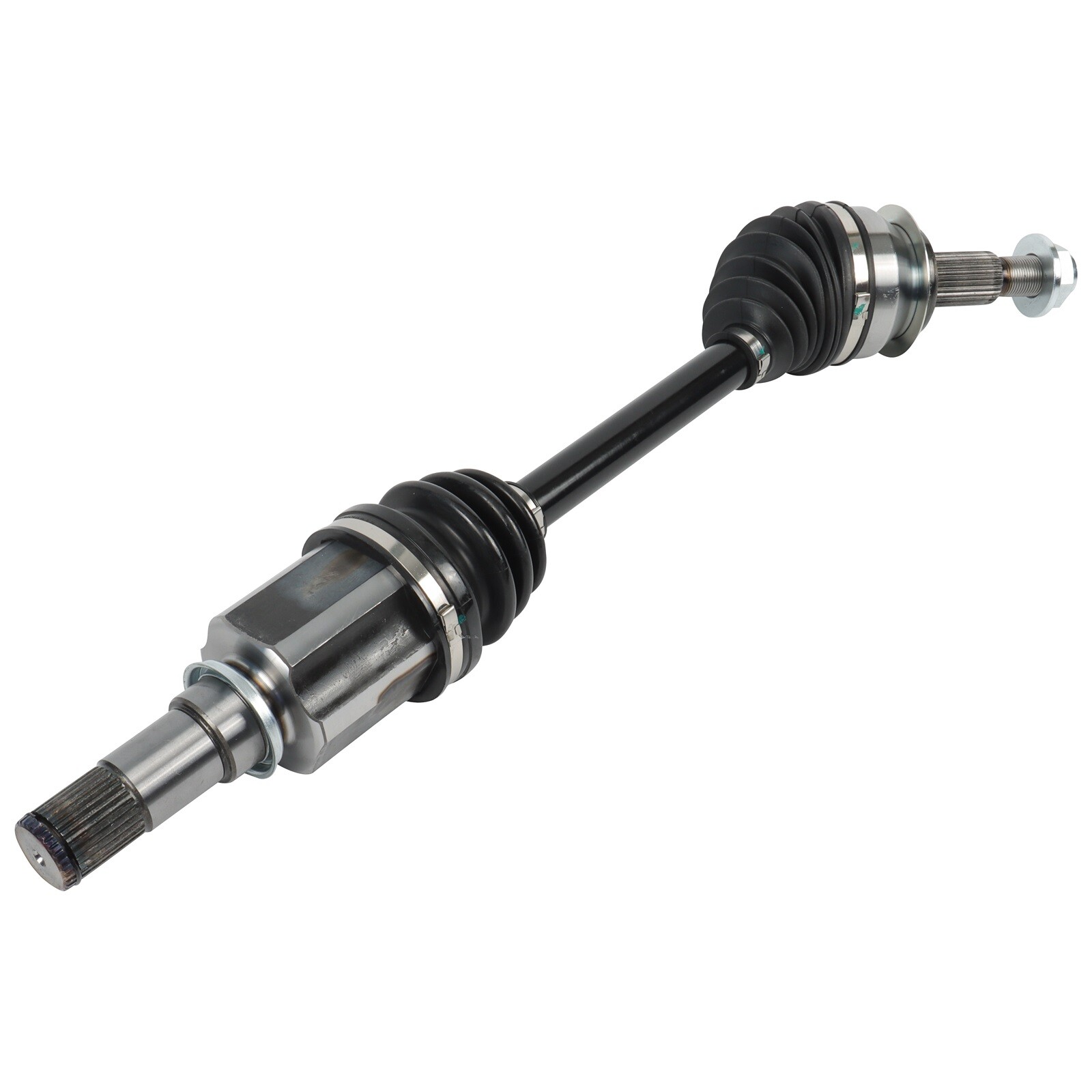



For Mazda CX-3 Grand Touring 2016-2019 2.0L FWD Front Left CV Axle Drive Shaft
$ 43.01
Description
Specifications: Brand New - 100% Brand New and high quality auto parts. Easy installation - Direct Plug In Replacement. Heat Treated - All CV axles are heat treated to the highest standards to provide premium strength, increased tensile, and extended service life. Quality Control - All CV axles undergo an extensive quality control process to ensure a long and trouble-free performance. Precision Fitment - Machined splines for precise fit to OEM specifications. Premium Materials - Only premium raw materials to manufacture their products. Signs of Worn CV Axles: For Mazda CX-3 Grand Touring 2016-2019 2.0L FWD Front Left CV Axle Drive Shaft Specifications: Brand New - 100% Brand New and high quality auto parts. Easy installation - Direct Plug In Replacement. Heat Treated - All CV axles are heat treated to the highest standards to provide premium strength, increased tensile, and extended service life. Quality Control - All CV axles undergo an extensive quality control process to ensure a long and trouble-free performance. Precision Fitment - Machined splines for precise fit to OEM specifications. Premium Materials - Only premium raw materials to manufacture their products. Signs of Worn CV Axles: Clicking or Popping Noises A prominent sign of a worn CV axle is a clicking or popping noise, especially during sharp turns or when accelerating. This noise may indicate that the CV joint is damaged or the protective boot has torn, allowing dirt and debris to enter and damage the joint. Vibration or Shaking If you experience vibrations or shaking, particularly during acceleration, it can be a sign of CV axle wear. Worn CV joints can cause the axle to wobble, resulting in an unsettling sensation in the steering wheel or the vehicle as a whole. Grease Leakage Damaged or worn CV axle boots may lead to the leakage of grease around the axle joints. Inspect the boots visually for cracks, tears, or signs of deterioration. Grease leakage can accelerate wear and lead to joint failure if left unaddressed. Axle Boot Damage The CV axle boots are protective covers that keep dirt and moisture out while retaining grease within the joint. If the boots are torn or damaged, they should be replaced promptly to prevent further damage to the CV joints. Factors Affecting CV Axle Lifespan: Mileage and Driving Conditions While there is no set mileage at which CV axles must be replaced, factors such as mileage and driving conditions can affect their lifespan. Aggressive driving, frequent acceleration, heavy loads, and driving on rough or unpaved roads can accelerate wear and lead to earlier replacement. Regular Maintenance Regular inspections and maintenance can help identify early signs of CV axle wear. Routine inspections should include a visual check of the boots, listening for unusual noises, and monitoring any vibrations or steering irregularities. How To Change Your CV Axle: The process below is a general guide on the steps to replace a CV axle. Your vehicle may be slightly or drastically different, depending on the make and model. Refer to your vehicle’s service manual to see the exact steps that you’ll need to follow. You’ll also notice that we recommend using an impact wrench to remove the axle nut, but note that doing the job by hand is safer when done while the car is on the ground. If you’re following the by-hand route, step five should be performed before jacking up the car. Make sure the vehicle is in Park or that it is in gear with the parking brake set. Jack up the car and remove the wheel on the side where you will be working. Locate the axle nut. It will be in the direct center of the hub or wheel assembly where you removed the wheel. Some vehicles have a cotter pin to secure the axle nut. You’ll need to remove it using pliers to straighten the pin so it can be pulled out. You can spray it with lubricant if it’s rusted or stuck. Now it’s time to remove the axle nut. In some cases, this step may require quite a bit of effort. If this is the case, your safety bet is to do this step before jacking the car up. This is where the optional impact wrench will come in handy. The wrench will help you safely remove the axle nut without having to use a pry bar. Carefully remove the bolts holding the brake caliper brackets in place and remove the calipers. Instead of dropping the caliper to dangle on the brake line, use a carabiner or other small hook to support the caliper and keep pressure off the brake line. Loosed the bolts holding the outer tie rod to the steering knuckle. If there’s another pin here, you’ll again need to use pliers to straighten it out. In some cases, the steering knuckle and tie rod will not want to be separated. This will require a few light taps with a hammer or mallet. Remove the bolts holding the hub to the strut tower. You’ll need to keep the nut from turning while unbolting the hub. Look further down the axle to see where it meets the transmission. Use your pry bar to pry the axle from the CV joint. You should be able to remove the axle at this point. You might see transmission fluid or have some leak while prying the axle. This is completely fine, but you may want to set up a pan or tray to catch the fluid. Insert the new axle into the transmission where the old one was removed. You can use your mallet or a hammer wrapped in a towel to carefully coax the axle into position. Attach the new axle to the hub and begin replacing the bolts you removed earlier in the process:Hub/strut tower; Tie Rod/steering knuckle; Caliper Replace the axle nut. Here, as before, use an impact wrench if you have one to safely tighten the nut. If you don’t have one, get the nut as tight as you can without yanking on it while it’s up on stands. Replace the wheel and lower the vehicle. If you need to tighten the axle nut further, it’s best to do it with the vehicle on the ground, so that you can really push on a wrench or bar to tighten without worrying about the vehicle falling. FAQs About CV Axles Q: Can You Drive With a Bad CV Axle? A: No. Do not ignore a bad CV axle. The vibrations you’re feeling and noise you’re hearing are a warning that it’s time for maintenance. If your axle fails while you’re driving, you could lose control of your car. Q: How Long Should a CV Axle Last? A: CV axles are usually covered by the manufacturer’s powertrain warranty, which should have you covered for at least four to five years and 50,000 to 60,000 miles. As for whether or not the axle makes it past the warranty period, there are many factors that can impact its lifespan. Driving over rough terrain where there are rocks and debris can shorten the life of a CV axle, because there are more opportunities to damage the rubber boot that protects the moving parts. The same goes for driving in snowy or icy conditions, where salt and sand can also damage the rubber. In some cases, the rubber just dries out and cracks, which has the same effect. Q: What Does a Bad Axle Sound Like? A: If you hear a clicking or grinding sound while turning, there’s a good chance your CV axle is starting to go. The noise may also be present while accelerating, but it’s most noticeable when turning the steering wheel. Q: Can The CV Axle Damage My Transmission? A: Yes, since it’s connected directly to the transmission, a failing CV axle can cause damage. Excessive movement from a damaged axle can wear components inside the transmission more quickly than they would normally. Item Specifics Product Condition Brand New Type Car & Truck CV Drive Axle Shaft Assembly Brand landmonstershop Manufacturer Part Number LM182492S01 Manufacturer Warranty 5 Years Placement on Vehicle Front Left (Front Driver Side) OE/OEM Part Number NCV47078 Superseded Part Number FTD52560XA Interchange Part Number FTD52560X Note Please check Compatibility description Quality 1 Items Included 1x CV Joint Axle Shaft Package Type Box Input Shaft Connection Style Splined Output Shaft Connection Style Splined Universal Fitment No Vintage Car Part No Outboard Joint Type Conventional Axle Nut Type Hex Fitment Type Direct Replacement Material Steel Surface Finish Heat Treatment Color As Shown Modified Item No Drive Type FWD (Front Wheel Drive) Payment We can accept Credit card, Debit card, Apple Pay, Google Pay, visa,or master card,and so on.Thank you. Additional shipping fee may be charged for buyers from Puerto Rico, Hawaii, Alaska, Guam, and the U.S. military address of the United States or other remote area (zone 8-10). Shipping All domestic orders will be shipped via USPS, UPS or Fedex from our US warehouse and usually arrives to your door in about 2-7 business days. Local pick up is not available. Return All of our brand new items come with a 60-Days money-back guarantee. Contact US Any question, please contact us by email on working days. Feedback If you are satisfied with the product you received, please leave us positive feedback and 5 scores DSR. Best Sales For Audi A6 Quattro 2012-2018 for Q5 2011-2015 3.0L Front CV Axle Shaft 2Pcs USD 145.55 For Subaru Legacy for Outback 2015-2019 Front Left Right CV Axle Drive Shaft USD 80.15 For Nissan Titan 2004-2015 for INFINITI QX56 2004-2010 Front CV Axle Drive Shaft USD 81.93 For GMC Acadia 2017-2019 V6 3.6L Front Left Driver Side CV Axle Drive Shaft USD 82.25 For Nissan Murano 2003-2007 V6 3.5L FWD Front Right CV Axle Drive Shaft USD 95.55 Newly Listed Automatic Trans For Toyota for Corolla 2003-2008 Front Right CV Axle Drive Shaft USD 70.95 For R320 3.0L 2007-2009 R350 3.5L 2006-2011 Front Side CV Axle Drive Shaft 2Pcs USD 190.84 For Encore 2013-2021 for Trax 2013-2022 1.4L Rear Left Right CV Axle Drive Shaft USD 74.45 For Volvo V50 2008-2011 for C70 2011-2013 Front Right CV Axle Automatic Trans USD 87.95 For INFINITI I35 02-04 Nissan Maxima 02-03 3.5L Front Right CV Axle Drive Shaft USD 100.05 Terms & Contact Payment Policy Shipping Policy Return Policy FAQ About Us For Mazda CX-3 Grand Touring 2016-2019 2.0L FWD Front Left CV Axle Drive Shaft Specifications: Brand New - 100% Brand New and high quality auto parts. Easy installation - Direct Plug In Replacement. Heat Treated - All CV axles are heat treated to the highest standards to provide premium strength, increased tensile, and extended service life. Quality Control - All CV axles undergo an extensive quality control process to ensure a long and trouble-free performance. Precision Fitment - Machined splines for precise fit to OEM specifications. Premium Materials - Only premium raw materials to manufacture their products. Signs of Worn CV Axles: Clicking or Popping Noises A prominent sign of a worn CV axle is a clicking or popping noise, especially during sharp turns or when accelerating. This noise may indicate that the CV joint is damaged or the protective boot has torn, allowing dirt and debris to enter and damage the joint. Vibration or Shaking If you experience vibrations or shaking, particularly during acceleration, it can be a sign of CV axle wear. Worn CV joints can cause the axle to wobble, resulting in an unsettling sensation in the steering wheel or the vehicle as a whole. Grease Leakage Damaged or worn CV axle boots may lead to the leakage of grease around the axle joints. Inspect the boots visually for cracks, tears, or signs of deterioration. Grease leakage can accelerate wear and lead to joint failure if left unaddressed. Axle Boot Damage The CV axle boots are protective covers that keep dirt and moisture out while retaining grease within the joint. If the boots are torn or damaged, they should be replaced promptly to prevent further damage to the CV joints. Factors Affecting CV Axle Lifespan: Mileage and Driving Conditions While there is no set mileage at which CV axles must be replaced, factors such as mileage and driving conditions can affect their lifespan. Aggressive driving, frequent acceleration, heavy loads, and driving on rough or unpaved roads can accelerate wear and lead to earlier replacement. Regular Maintenance Regular inspections and maintenance can help identify early signs of CV axle wear. Routine inspections should include a visual check of the boots, listening for unusual noises, and monitoring any vibrations or steering irregularities. How To Change Your CV Axle: The process below is a general guide on the steps to replace a CV axle. Your vehicle may be slightly or drastically different, depending on the make and model. Refer to your vehicle’s service manual to see the exact steps that you’ll need to follow. You’ll also notice that we recommend using an impact wrench to remove the axle nut, but note that doing the job by hand is safer when done while the car is on the ground. If you’re following the by-hand route, step five should be performed before jacking up the car. Make sure the vehicle is in Park or that it is in gear with the parking brake set. Jack up the car and remove the wheel on the side where you will be working. Locate the axle nut. It will be in the direct center of the hub or wheel assembly where you removed the wheel. Some vehicles have a cotter pin to secure the axle nut. You’ll need to remove it using pliers to straighten the pin so it can be pulled out. You can spray it with lubricant if it’s rusted or stuck. Now it’s time to remove the axle nut. In some cases, this step may require quite a bit of effort. If this is the case, your safety bet is to do this step before jacking the car up. This is where the optional impact wrench will come in handy. The wrench will help you safely remove the axle nut without having to use a pry bar. Carefully remove the bolts holding the brake caliper brackets in place and remove the calipers. Instead of dropping the caliper to dangle on the brake line, use a carabiner or other small hook to support the caliper and keep pressure off the brake line. Loosed the bolts holding the outer tie rod to the steering knuckle. If there’s another pin here, you’ll again need to use pliers to straighten it out. In some cases, the steering knuckle and tie rod will not want to be separated. This will require a few light taps with a hammer or mallet. Remove the bolts holding the hub to the strut tower. You’ll need to keep the nut from turning while unbolting the hub. Look further down the axle to see where it meets the transmission. Use your pry bar to pry the axle from the CV joint. You should be able to remove the axle at this point. You might see transmission fluid or have some leak while prying the axle. This is completely fine, but you may want to set up a pan or tray to catch the fluid. Insert the new axle into the transmission where the old one was removed. You can use your mallet or a hammer wrapped in a towel to carefully coax the axle into position. Attach the new axle to the hub and begin replacing the bolts you removed earlier in the process:Hub/strut tower; Tie Rod/steering knuckle; Caliper Replace the axle nut. Here, as before, use an impact wrench if you have one to safely tighten the nut. If you don’t have one, get the nut as tight as you can without yanking on it while it’s up on stands. Replace the wheel and lower the vehicle. If you need to tighten the axle nut further, it’s best to do it with the vehicle on the ground, so that you can really push on a wrench or bar to tighten without worrying about the vehicle falling. FAQs About CV Axles Q: Can You Drive With a Bad CV Axle? A: No. Do not ignore a bad CV axle. The vibrations you’re feeling and noise you’re hearing are a warning that it’s time for maintenance. If your axle fails while you’re driving, you could lose control of your car. Q: How Long Should a CV Axle Last? A: CV axles are usually covered by the manufacturer’s powertrain warranty, which should have you covered for at least four to five years and 50,000 to 60,000 miles. As for whether or not the axle makes it past the warranty period, there are many factors that can impact its lifespan. Driving over rough terrain where there are rocks and debris can shorten the life of a CV axle, because there are more opportunities to damage the rubber boot that protects the moving parts. The same goes for driving in snowy or icy conditions, where salt and sand can also damage the rubber. In some cases, the rubber just dries out and cracks, which has the same effect. Q: What Does a Bad Axle Sound Like? A: If you hear a clicking or grinding sound while turning, there’s a good chance your CV axle is starting to go. The noise may also be present while accelerating, but it’s most noticeable when turning the steering wheel. Q: Can The CV Axle Damage My Transmission? A: Yes, since it’s connected directly to the transmission, a failing CV axle can cause damage. Excessive movement from a damaged axle can wear components inside the transmission more quickly than they would normally. Payment Shipping Return Contact US Feedback We can accept Credit card, Debit card, Apple Pay, Google Pay, visa,or master card,and so on.Thank you. Additional shipping fee may be charged for buyers from Puerto Rico, Hawaii, Alaska, Guam, and the U.S. military address of the United States or other remote area (zone 8-10). All domestic orders will be shipped via USPS, UPS or Fedex from our US warehouse and usually arrives to your door in about 2-7 business days. Local pick up is not available. All of our brand new items come with a 60-Days money-back guarantee. Any question, please contact us by email on working days. If you are satisfied with the product you received, please leave us positive feedback and 5 scores DSR. All rights reserved.
Just wanna say thank you you guys really came with my purchase on time and I’m so happy I would recommend to buy off of eBay. Product is great and it’s worth it. You didn’t have to wait long and the order was right when I purchased that wrong. Everything was just amazing. I couldn’t be so satisfied with the help that this company has gave you thank you so much for my purchase. I’m so happy. Have a blessed day and good night.
Item arrived sooner than estimated time. Well packed. Item is new, as described. Fit and function is perfect, no issues. Good product, excellent value.
Very good seller. High quality product. Nice appearance. Good condition and value. Very well packed, item arrived as described with no damage. A+
Related products
TrakMotive GM-8206 CV Axle Shaft For 04-10 Alero Aura G6 Malibu
$ 43.41TrakMotive HO-8089 CV Axle Shaft For 97-01 Honda CR-V
$ 54.91TrakMotive GM-8045 CV Axle Shaft
$ 40.47TrakMotive GM-8054 CV Axle Shaft
$ 40.56